
One of the first hard decisions you make in your life is getting married, but what may prove to be more difficult is the hopefully unlikely situation of ending your marriage. Getting separated from your spouse is never an easy decision, it comes with a lot of questions, legalities, and emotions. Whether it's you who is contemplating a divorce or supporting someone who is, educating yourself on the process is the first step towards clarity and peace of mind.
This step-by-step guide will simplify this daunting task, by outlining the grounds for divorce and how to navigate the application process. So, let’s dive in!
Applying for a divorce means you first have to file an application in court. This helps in ensuring that you meet the required eligibility criteria before the proceedings begin. To file for a divorce, you must meet some of the conditions.
This means that your marriage should be recognized under the Laws of Canada with a valid Marriage License issued by the respective Province. In the event that you were married in some other country, your marriage is still considered legal so long as it complies with the laws of the country where your marriage took place and is recognized in Canada.
Among many others, the breakdown of a marriage is the main ground for divorce. To prove this, one of the three following statements must be true:
Residency plays a crucial role in determining whether you can apply for divorce. You or your spouse must have lived in the Province or Territory where you wish to get divorced, for a period of at least one (1) year.
If all these criteria are met, you can proceed with the divorce application in your respective location.
It should be noted that there is tremendous benefit to have beside you a seasoned and professional family lawyer to help simplify the entirety of the process, and champion your interests. Should you find yourself in this situation, do not hesitate to reach out to us here at Rutman & Rutman Professional Corporation.
If we talk about the Divorce laws Act and Family Law Act they are both federal law. However, provinces and territories manage the process of applying for a divorce completely. This means that even if the legal foundation for divorce is similar across the country, some requirements and steps may vary depending on where you live.
If you are filing for divorce, you have to first fill out the forms and file them in court. You can do this on your own, or get it done from your lawyer. Also, there is a nominal application fee that you have to pay. The purpose of this form is to gather all the information about your marriage:
Family lawyers can help you navigate legal paperwork and ensure all the requirements are met accurately and on time.
For a significantly smoother and faster process, it’s better if you and your partner can agree on key matters like child support, spousal support, child custody, and more. Reaching a mutual agreement on these issues in an informal setting will greatly minimize the financial and emotional stress for every individual involved.
But, if an agreement cannot be reached, you can approach the court to make these decisions. Keep in mind however that reaching out to court will make the divorce process longer and more costly.
Many provinces and territories offer family justice services that help couples resolve disputes. ‘Mediation’ is one of those services that make it easy to negotiate and come to decisions about property division, parenting arrangements, etc, as this is done with the benefit of a neutral third party whose only goal is to help facilitate a settlement.
There is another point to be noted – mediation along with other dispute resolution methods may result in less animosity, which is crucial if you and your partner have decided to co-parent after the separation.
Under Canadian divorce laws, you can apply for a divorce without a lawyer. But you may ask yourself – does the cost of an attorney outweigh the benefit that having one provides? Family law is extremely complex. Many self-represented individuals struggle with the paperwork, leading to delays or even rejections of their applications.
Additionally, your conduct through mediation and dispute resolution can play a factor in the ultimate decision regarding parenting time, custody, and child/spousal support. Given the emotional volatility of the situation, there is extreme benefit in having an experienced Family Lawyer advance your interests on your behalf to ensure it is done respectfully, and does not harm your chances at a favourable settlement.
So, while you don’t have to hire a lawyer, having one to review your case and rigorously advance your position, could save you a lot of time, stress, money and increase your chances of success in the long run. Divorce laws are intricate, and wouldn’t you want to safeguard your interests during such a major life change?
In Canada, only residents are typically allowed to file for divorce under the Divorce Law Act. If neither spouse resides in Canada, they cannot get a divorce there. However, an exception exists under the Civil Marriage Act, which permits marriage dissolution if two criteria are fulfilled: the marriage must have occurred in Canada, and neither spouse can annul the marriage in their country due to its lack of recognition of the Canadian marriage.
To initiate the process under the Civil Marriage Act, the individuals must apply to the Superior Court in the province where they are married. Consulting a family law office in that province can guide the necessary steps, and information can also be secured from either a Superior Court the Department of Justice, or the Attorney General in the respective province.
It is crucial to recognize that this process solely terminates the marriage; issues related to child support and spousal support must be resolved per the laws of the spouses' current country of residence.
Navigating the complexities of divorce laws can be overwhelming, but you don’t have to face it all by yourself. At Rutman & Rutman Professional Corporation, our friendly family lawyers in Brampton are here to offer you compassionate and expert guidance that’s all about your unique needs. We’re dedicated to protecting your interests and supporting you every step of the way.
So, don’t let uncertainty keep you in limbo! Reach out to us today to set up a consultation and take that first step toward finding clarity and peace of mind in your divorce journey. Divorce laws can be confusing, but you can navigate them effectively with the right guidance. We’ve got your back!
Losing someone close to you is one of the hardest experiences in life. During this sad time, focusing on work becomes challenging. That’s why bereavement leave exists. It gives employees the time and space they need to grieve, attend funeral arrangements, and be with their families. In Ontario, bereavement leave is protected under the Employment Standards Act (ESA). There is so much you must know about this leave policy, so this guide covers: What is a bereavement leave Who qualifies for the leave If it is a paid or unpaid leave, and more When you know these details, you can properly determine if you are getting all the rights and entitlements from your employer. What is a Bereavement Leave in Ontario? Bereavement leave is a job-protected, unpaid leave for employees to help them heal after the sudden death of a family member. During this time, they can attend funeral services,...
Read MoreBalancing work and personal life is essential. As important as it is to stay committed at work, it’s important to take time for yourself and handle personal responsibilities when life demands it. There are times when your health needs attention, your family needs support, or unexpected and unavoidable situations arise. During these times, you shouldn’t have to worry about your job security. That’s why Ontario provides job-protected leaves under the Employment Standards Act, 2000 (ESA), so employees can step away when necessary and return without risking their employment. There are limits on the types of leave you can apply for under Ontario's employment policy. Let’s understand everything about leave of absence in Ontario as per Ontario’s Employment Standards Act, 2000 (ESA). What Is a Leave of Absence in Ontario? A leave of absence means that you can take time off work while keeping your employment status active. These leaves are...
Read MoreEmployees are not always comfortable replying to work emails and messages even after their working hours have ended. With phones and laptops always nearby, the boundary between work and personal time has become blurred. Over time, this constant connectivity can affect both work-life balance and overall well-being. As these concerns became more common across workplaces in the province, clearer rules were introduced to address after-hours communication and employer expectations. In Ontario, some employers must have a written Right to Disconnect policy that explains after-hours communication, but it doesn’t stop them from contacting you after work. This guide explains everything employees and employers need to know about the policy. What is the Right to Disconnect? The Ontario “Right to Disconnect” policy was introduced by the provincial government on December 2, 2021, under the Employment Standards Act, 2000 (ESA). Under the policy, employees may disconnect from work after working hours. The purpose...
Read More
Losing someone close to you is one of the hardest experiences in life. During this sad time, focusing on work becomes challenging. That’s why bereavement leave exists. It gives employees the time and space they need to grieve, attend funeral arrangements, and be with their families. In Ontario, bereavement leave is protected under the Employment Standards Act (ESA). There is so much you must know about this leave policy, so this guide covers: What is a bereavement leave Who qualifies for the leave If it is a paid or unpaid leave, and more When you know these details, you can properly determine if you are getting all the rights and entitlements from your employer. What is a Bereavement Leave in Ontario? Bereavement leave is a job-protected, unpaid leave for employees to help them heal after the sudden death of a family member. During this time, they can attend funeral services,...
Read More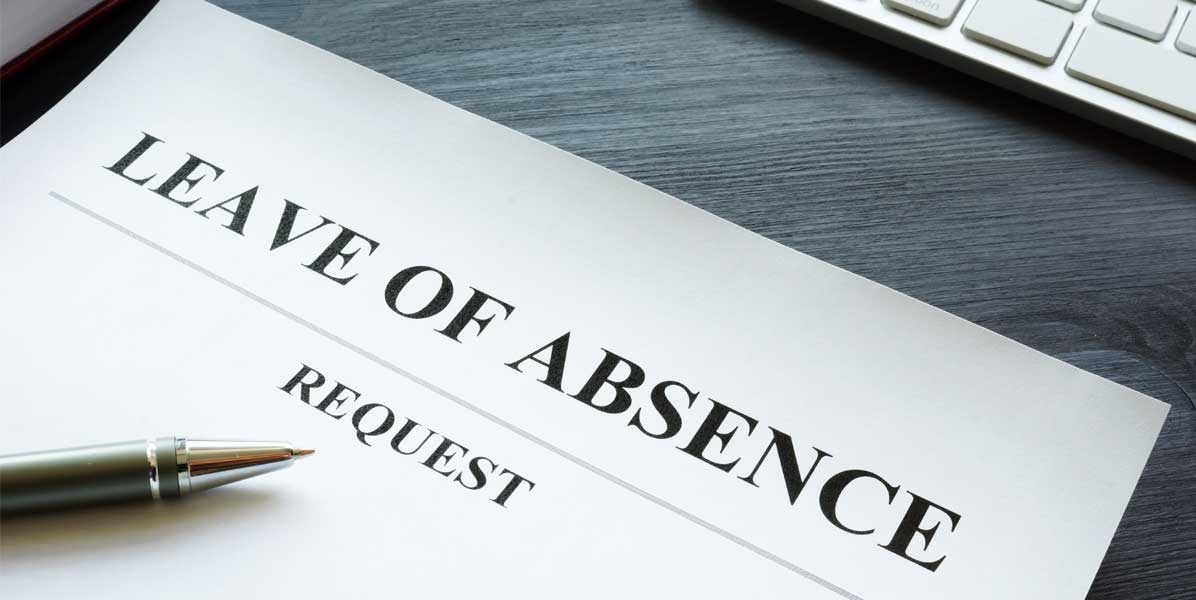
Balancing work and personal life is essential. As important as it is to stay committed at work, it’s important to take time for yourself and handle personal responsibilities when life demands it. There are times when your health needs attention, your family needs support, or unexpected and unavoidable situations arise. During these times, you shouldn’t have to worry about your job security. That’s why Ontario provides job-protected leaves under the Employment Standards Act, 2000 (ESA), so employees can step away when necessary and return without risking their employment. There are limits on the types of leave you can apply for under Ontario's employment policy. Let’s understand everything about leave of absence in Ontario as per Ontario’s Employment Standards Act, 2000 (ESA). What Is a Leave of Absence in Ontario? A leave of absence means that you can take time off work while keeping your employment status active. These leaves are...
Read More
Employees are not always comfortable replying to work emails and messages even after their working hours have ended. With phones and laptops always nearby, the boundary between work and personal time has become blurred. Over time, this constant connectivity can affect both work-life balance and overall well-being. As these concerns became more common across workplaces in the province, clearer rules were introduced to address after-hours communication and employer expectations. In Ontario, some employers must have a written Right to Disconnect policy that explains after-hours communication, but it doesn’t stop them from contacting you after work. This guide explains everything employees and employers need to know about the policy. What is the Right to Disconnect? The Ontario “Right to Disconnect” policy was introduced by the provincial government on December 2, 2021, under the Employment Standards Act, 2000 (ESA). Under the policy, employees may disconnect from work after working hours. The purpose...
Read More
Are you stuck with a legal issue? Don't navigate the complexities alone! Turn to our top-rated lawyers for expert guidance and support, ensuring you make informed decisions every step of the way!
 call us: